
Florida residents have a lot going for them in the conservative movement, but the results of an ongoing court case just gave local governments the power to tax their residents by citation … as much as they want.
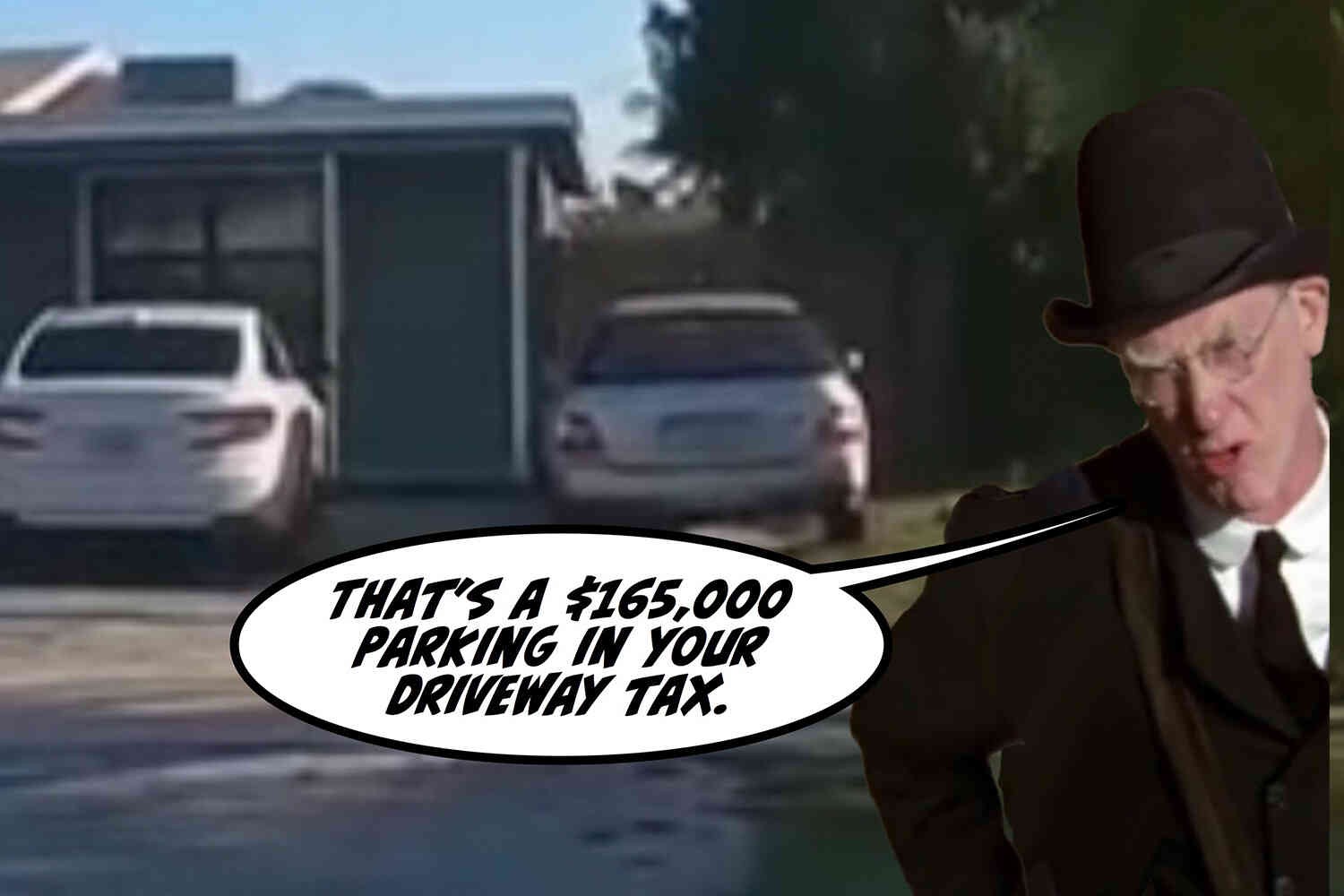
Lantana (a small town of about 12,000 people) resident Sandy Martinez lives with her two adult children and her sister, and all four of them have cars. Their street has no parking available for cars, so they parked all four vehicles in her driveway.
Back in 2019, one of the cars' tires were off the driveway on the grass. Since it is illegal to park a vehicle in one's yard in Lantana, Martinez was fined $250 per day until she rectified the situation.
After she received her first citation in May 2019, Martinez repeatedly tried to arrange a visit by a code-enforcement officer to show that she had corrected the violation. But after those efforts proved ‘fruitless,' the complaint says, she ‘eventually forgot about the issue.'
The daily fines continued to accumulate, eventually exceeding $100,000.
But the fines didn't stop there.
Lantana also noticed that Martinez had some cosmetic cracks in her driveway (also illegal in Lantana) and started fining her $75 per day for that.
And immediately after a storm blew her fence apart, they started fining her $125 per day while she waited for her insurance to repair it.
Again there was no way Martinez could stop the fines from accumulating or pay them as they swelled into excessive amounts.
Martinez's grand total for all the city fines was $165,000 when she took them to court.
Art. I, § 17 of Florida's constitution reads,
Excessive fines, cruel and unusual punishment, attainder, forfeiture of estate, indefinite imprisonment, and unreasonable detention of witnesses are forbidden.
And one would think that $165,000 in city fines that sound fairly arbitrary and unjust would fall under that clause.
But the courts and the appeals courts disagree. They argued that precedent allowed "wide deference" to state and local governments when it comes to what is considered excessive penalties.
The Fourth DCA concluded, total fines were irrelevant; rather, it held, ‘the focus is on the fines' per diem amount.'
Regardless of whether there is any means to stop those daily fines from compounding ad infinitum.
The Florida Supreme Court refused to hear the appeal, so that ruling stands as the correct interpretation of the state constitution.
Martinez's attorney said,
‘Six-figure fines for parking on your own property are shocking. The Florida Constitution's Excessive Fines Clause was designed to stop precisely this sort of abuse — to prevent people from being fined into poverty for trivial violations,' said IJ Senior Attorney Ari Bargil. ‘The court's refusal to hear Sandy's case and clarify the constitution's protections from run-away government fines is a disservice to all Floridians.'
A disservice for all Floridians is putting it mildly.
Every municipality in the state just got the green light to fine Floridians into oblivion for any little thing they want.

P.S. Now check out our latest video 👇